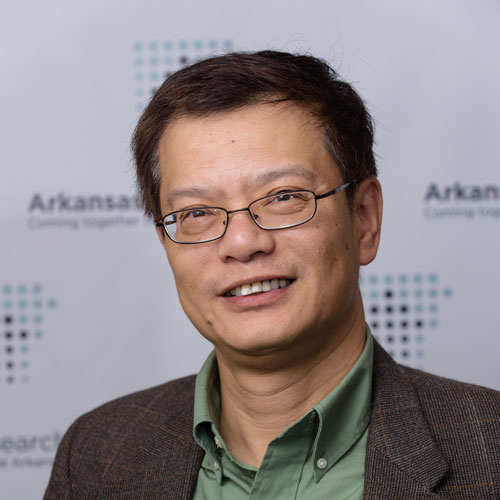
Weida Tong Institution Verified
Sourced from institutional research profiles (UAMS TRI or ARA).
Division Director
National Center for Toxicological Research
faculty
Research Areas
Links
Biography and Research Information
OverviewAI-generated summary
Weida Tong's research focuses on advancing regulatory science through the application of computational and data-driven methodologies. Tong's work has explored the regulatory landscape of emerging technologies, including nanotechnology and nanoplastics, from a global perspective. Additionally, Tong has investigated the analytical validity of circulating tumor DNA sequencing assays for precision oncology and contributed to establishing best practices for cancer mutation detection using whole-genome and whole-exome sequencing. This work includes the development of community reference samples and data sets for benchmarking these detection methods.
Further research interests include the integration of multi-omics data, utilizing ratio-based quantitative profiling with reference materials. Tong also examines the role of AI-based language models in drug discovery and development, as well as the broader impact of emerging technologies on regulatory science. As Division Director at the National Center for Toxicological Research, Tong leads a research group and maintains an active lab website. Tong has a notable publication record, with 11 total publications and a h-index of 4, and collaborates with researchers such as Joshua Xu, Leihong Wu, William Slikker, and Binsheng Gong, all from the National Center for Toxicological Research.
Metrics
- h-index: 4
- Publications: 11
- Citations: 618
Selected Publications
- AI-powered topic modeling: comparing LDA and BERTopic in analyzing opioid-related cardiovascular risks in women (2025) DOI
- Is ChatGPT Ready for Public Use in Organ-Specific Drug Toxicity Research? (2025) DOI
- Physiological liver microtissue 384-well microplate system for preclinical hepatotoxicity assessment of therapeutic small molecule drugs (2024) DOI
- Progress in toxicogenomics to protect human health (2024) DOI
- Generation of a drug-induced renal injury list to facilitate the development of new approach methodologies for nephrotoxicity (2024) DOI
- Evaluation of QSAR models for predicting mutagenicity: outcome of the Second Ames/QSAR international challenge project (2023) DOI
- Measurement and Mitigation of Bias in Artificial Intelligence: A Narrative Literature Review for Regulatory Science (2023) DOI
- Quartet DNA reference materials and datasets for comprehensively evaluating germline variant calling performance (2023) DOI
- PLM-ARG: antibiotic resistance gene identification using a pretrained protein language model (2023) DOI
- A generative adversarial network model alternative to animal studies for clinical pathology assessment (2023) DOI
- The Quartet Data Portal: integration of community-wide resources for multiomics quality control (2023) DOI
- Author Correction: Quartet RNA reference materials improve the quality of transcriptomic data through ratio-based profiling (2023) DOI
- DICTrank: The largest reference list of 1318 human drugs ranked by risk of drug-induced cardiotoxicity using FDA labeling (2023) DOI
- Quartet RNA reference materials improve the quality of transcriptomic data through ratio-based profiling (2023) DOI
- Correcting batch effects in large-scale multiomics studies using a reference-material-based ratio method (2023) DOI
ARA Academy 2016 ARA Fellow
Dr. Tong's work emphasizes developing bioinformatic tools and methodologies to support FDA research, regulatory science, and personalized medicine. His notable initiatives include the Microarray Quality Control (MAQC) consortium, the Liver Toxicity Knowledge Base (LTKB), in silico drug repositioning for rare disease treatment, and the ArrayTrack suite for pharmacogenomics review.
Policy Impact
Develops bioinformatic tools supporting FDA regulatory science and personalized medicine, anchoring critical federal research infrastructure in Arkansas.
Growth Areas
['Population Health Innovations & Clinical Research']
Collaborators
Researchers in the database who share publications
Similar Researchers
Based on overlapping research topics